The Best Fluffy Pancakes recipe you will fall in love with. Full of tips and tricks to help you make the best pancakes.
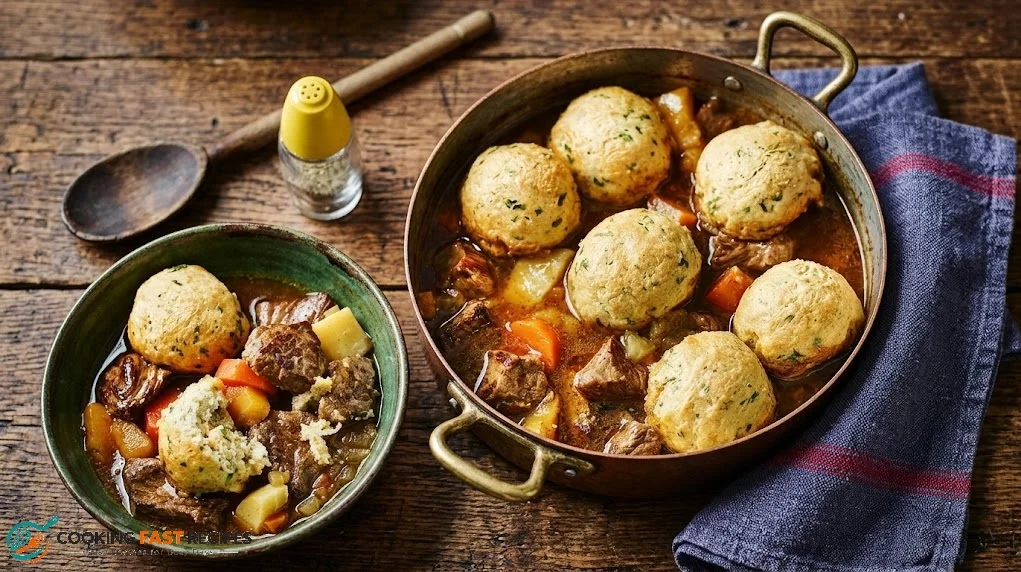
There is something especially comforting about a pot of beef stew topped with soft, fluffy dumplings. The beef cooks slowly in a rich gravy with carrots, onions, celery, and herbs, while the dumplings steam on top and soak up some of the savoury flavour.
This stew and dumplings recipe brings tender beef, slow-cooked vegetables, and rich homemade gravy together with soft, fluffy herb dumplings. It is inspired by classic British comfort food and makes a satisfying dinner for four, using everyday ingredients and straightforward cooking steps.
Although the stew takes time to become tender, most of that time is hands-off. Prepare it for a relaxed weekend dinner, a chilly evening, or whenever you want a filling homemade meal that can be served straight from the pot.
Why You’ll Love This Stew and Dumplings Recipe
- A complete comfort meal: Tender beef, vegetables, rich gravy, and fluffy dumplings come together in one dish.
- Simple ingredients: You can find everything you need in most supermarkets.
- A practical make-ahead option: The stew can be prepared in advance, then reheated before adding freshly made dumplings.
- Easy to customise: Use your preferred root vegetables and adjust the herbs to suit your taste.
- Perfect for sharing: The recipe serves four generous portions.
Ingredients for This Stew and Dumplings Recipe
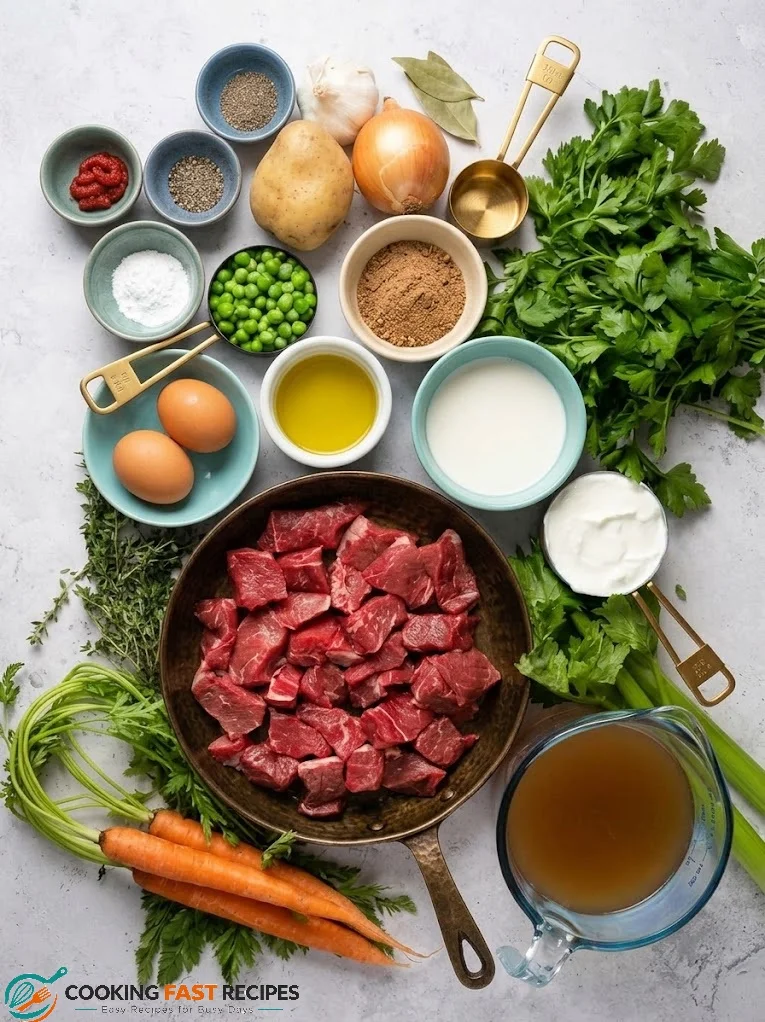
For the Beef Stew
- 700 g stewing beef, cut into bite-sized chunks
- 2 tablespoons vegetable oil
- 1 medium onion, chopped
- 2 medium carrots, peeled and cut into thick slices
- 2 celery sticks, chopped
- 2 garlic cloves, finely chopped
- 1 tablespoon tomato purée
- 2 tablespoons plain flour
- 750 ml beef stock
- 1 teaspoon Worcestershire sauce
- 1 teaspoon dried thyme
- 1 bay leaf
- ½ teaspoon salt, or to taste
- ½ teaspoon freshly ground black pepper
- 150 g mushrooms, halved or quartered (optional)
- 1 tablespoon chopped fresh parsley, for serving
For the Dumplings
- 150 g self-raising flour
- 75 g cold unsalted butter, cut into small cubes
- 1 teaspoon dried parsley or mixed herbs
- A pinch of salt
- 4–6 tablespoons cold water, as needed
Ingredient note: Self-raising flour helps the dumplings rise and become lighter. If you only have plain flour, use 150 g plain flour with 2 teaspoons baking powder. For a traditional alternative, vegetable suet can replace the butter, but the texture will be different.
How to Make Beef Stew and Dumplings
1. Brown the Beef
Pat the beef dry with kitchen paper. Heat the vegetable oil in a large, heavy-based saucepan or oven-safe casserole over medium-high heat.
Add the beef in batches, leaving space between the pieces. Brown the meat on several sides, then transfer it to a plate. Avoid overcrowding the pan, as too much meat at once can release moisture and prevent proper browning.
The browned pieces will add flavour to the finished gravy.
2. Cook the Vegetables
Reduce the heat to medium. Add the onion, carrots, and celery to the same pan, stirring to loosen any browned pieces from the bottom.
Cook for about 5 minutes, until the onion begins to soften. Add the garlic and cook for another 30 seconds, taking care not to burn it.
Stir in the tomato purée and cook for about one minute to deepen its flavour.
3. Build the Gravy
Sprinkle the plain flour over the vegetables and stir until everything is lightly coated. Cook for one minute, then gradually pour in the beef stock while stirring.
Add the Worcestershire sauce, thyme, bay leaf, salt, and black pepper. Return the browned beef and any juices from the plate to the pan. Add the mushrooms if using.
Bring the mixture to a gentle simmer, then reduce the heat to low. Cover with a lid, leaving it slightly ajar if necessary to prevent the liquid from boiling too vigorously.
4. Simmer Until the Beef Is Tender
Cook gently for about 1 hour 45 minutes to 2 hours, stirring occasionally. Check the liquid level during cooking and add a little hot water or stock if the gravy becomes too thick before the beef is tender.
The exact cooking time depends on the cut and size of the beef pieces. The meat should be tender enough to cut easily with a fork before you add the dumplings.
If the gravy is thinner than you prefer, simmer the stew uncovered for a few minutes before adding the dumplings. Keep enough liquid in the pan to maintain a moist cooking environment.
5. Prepare the Dumpling Dough
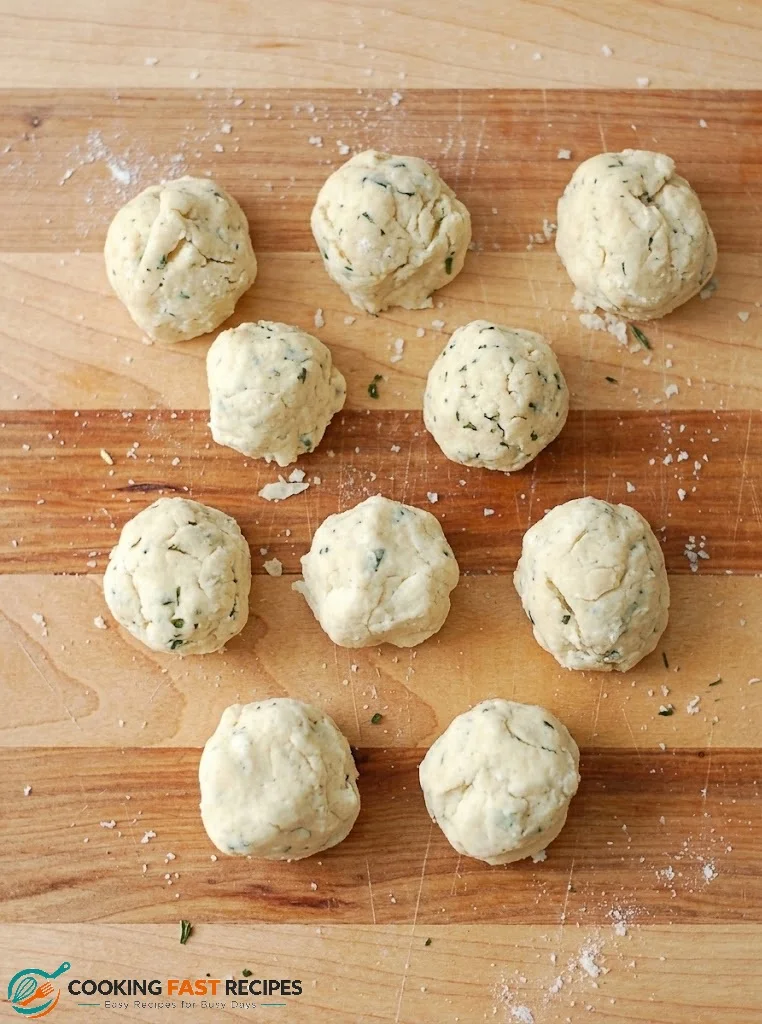
When the beef is nearly tender, place the self-raising flour, salt, and dried herbs in a mixing bowl.
Add the cold butter and rub it into the flour with your fingertips until the mixture resembles coarse breadcrumbs. Work lightly rather than pressing the mixture into a firm paste.
Add cold water one tablespoon at a time, mixing gently until a soft dough forms. You may not need all the water.
Divide the dough into eight equal portions and shape each into a loose ball. Avoid kneading the dough heavily, as this can make the dumplings dense.
6. Add the Dumplings to the Stew
Check that the stew is gently simmering. Arrange the dumplings on the surface, leaving a little space between them because they will expand as they cook.
Cover the pan with a tight-fitting lid and cook over low heat for 20–25 minutes. Keep the stew at a gentle simmer rather than a vigorous boil, and avoid lifting the lid repeatedly because the dumplings need steady steam to rise.
The dumplings are ready when they have expanded and the centres are cooked through. If necessary, cook for a few additional minutes and check one dumpling before serving.
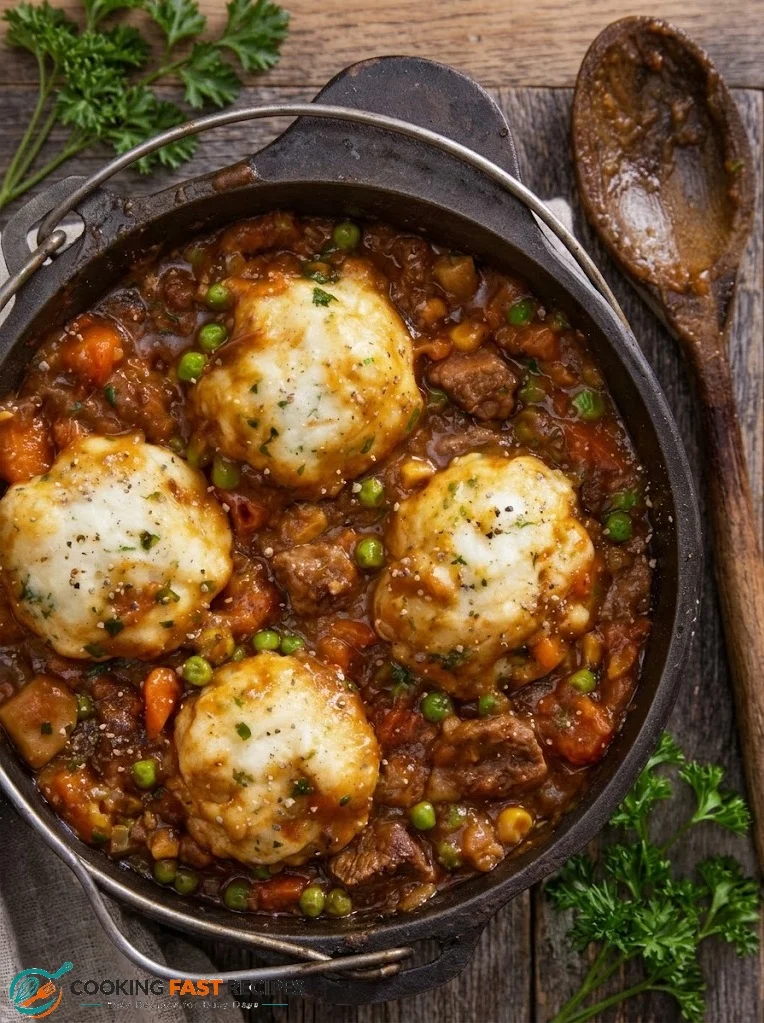
7. Serve Warm
Remove the bay leaf and taste the gravy. Adjust the seasoning if needed, then sprinkle with fresh parsley.
Serve the beef, vegetables, gravy, and dumplings in warm bowls. The dish is filling on its own, but steamed green beans, peas, cabbage, or broccoli make useful accompaniments.
Tips for Tender Beef and Fluffy Dumplings
Brown the meat in batches. This gives the beef a deeper flavour and helps build a richer base for the gravy.
For the best results with this stew and dumplings recipe, make sure the beef is tender before adding the dumplings, and keep the lid on while they steam.
Keep the heat low. A gentle simmer allows tougher stewing cuts to soften without reducing the liquid too quickly.
Give the beef enough time. If the meat is still chewy after the suggested cooking time, continue simmering and check it at regular intervals. Adding the dumplings too early can leave them overcooked while the beef finishes tenderising.
Handle the dumpling dough gently. Mix only until the dough comes together. Heavy kneading can produce a firmer texture.
Keep the lid on while the dumplings cook. The trapped steam helps them rise and cook evenly. Check that the stew is not boiling too hard underneath.
Adjust the gravy before adding the dumplings. If it is too thin, simmer it uncovered briefly. If it is too thick, stir in a small amount of hot stock or water.
Easy Variations
Add More Root Vegetables
Parsnips, swede, or small potato chunks can be added with the carrots. Cut the vegetables into similar-sized pieces so they cook evenly, and allow for a little extra cooking time if needed.
Make Herby Dumplings
Add finely chopped fresh parsley, thyme, or chives to the dry ingredients. Keep the quantity modest so the herbs complement rather than overpower the stew.
Use a Different Stock
Beef stock gives the dish its traditional deep flavour. Vegetable stock can be used instead, although the finished gravy will taste different. Choose a stock that suits your seasoning preferences.
Finish the Gravy with Fresh Herbs
A little chopped parsley stirred in just before serving adds freshness to the rich gravy. Remove the bay leaf before bringing the dish to the table.
What to Serve with Beef Stew and Dumplings
The dumplings already provide a substantial, filling accompaniment, so you do not need to prepare several extra dishes.
Try serving the stew with:
- Steamed green beans or peas
- Buttered cabbage
- Roasted root vegetables
- A simple side of broccoli
If you are planning more meals for the week, explore our easy weeknight dinner recipes for additional ideas.
How to Store and Reheat Leftovers
Allow leftover stew to cool promptly, then transfer it to a covered container and refrigerate within two hours. Keep it refrigerated and use within 48 hours for best quality.
For freezing, the beef stew is best frozen without the dumplings, as dumplings can become softer or denser after thawing. Freeze the cooled stew in a suitable airtight container for up to three months for best quality.
Thaw frozen stew in the refrigerator overnight. Reheat it in a saucepan until steaming hot throughout, stirring as needed. Add a splash of water or stock if the gravy has thickened during storage.
For the best texture, prepare a fresh batch of dumplings and cook them in the reheated stew until fully cooked. Avoid reheating leftovers more than once.
For additional food safety advice, read the UK Food Standards Agency’s guide to cooking food safely, including its recommendations for storing and reheating leftovers.
Frequently Asked Questions
Can I make stew and dumplings ahead of time?
Yes. You can prepare the beef stew in advance and refrigerate it once cooled promptly. Reheat it thoroughly before adding freshly prepared dumplings. This helps preserve their light texture.
Why are my dumplings heavy?
Dumplings can become dense if the dough is overworked, contains too little raising agent, or is cooked without enough trapped steam. Mix the dough gently, use fresh self-raising flour, and keep the lid on during cooking.
How do I know when the beef is tender?
The beef should yield easily when pressed with a fork. If it is still chewy, continue simmering gently and check it again. The cooking time can vary according to the cut and size of the pieces.
Can I make this recipe without mushrooms?
Yes. Simply leave them out or replace them with extra carrots or another suitable vegetable. The recipe will still work.
Can I use plain flour for the dumplings?
Yes. For this recipe, combine 150 g plain flour with 2 teaspoons baking powder before adding the butter and other ingredients. This provides the raising agent needed for a lighter dumpling.
A Comforting Homemade Meal
This easy stew and dumplings recipe brings together slow-cooked beef, vegetables, savoury gravy, and soft herb dumplings in one satisfying dish. With a little patience and a few everyday ingredients, you can make a warming meal that is ideal for sharing.
Make the stew until the beef is tender, add the dumplings near the end, and serve everything hot with your favourite green vegetables.