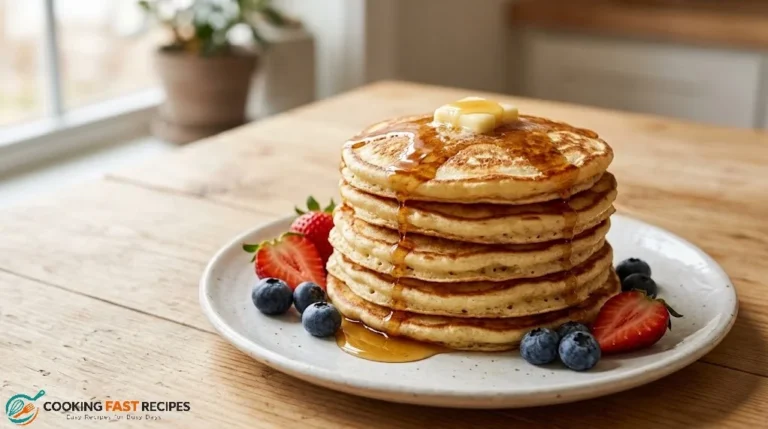
The Best Fluffy Pancakes recipe you will fall in love with. Full of tips and tricks to help you make the best pancakes.

This easy oven baked egg bites recipe makes breakfast simple, satisfying, and convenient for busy mornings. Made with eggs, cottage cheese, cheddar, spinach, and red bell pepper, these bite-sized portions combine a creamy texture with plenty of flavor. They can be prepared ahead, stored in the refrigerator, and reheated when you need a quick breakfast without starting from scratch.
Unlike a traditional breakfast casserole that needs to be sliced before serving, egg bites are baked individually in a muffin pan. Each portion is easy to serve, pack, or enjoy on the go. Pair them with toast and fresh fruit for a balanced breakfast, or keep a batch ready for busy weekday mornings.
One of the best things about this recipe is how easily you can customize it. Keep the spinach and red bell pepper for a colorful vegetable combination, use a different cheese if you prefer, or add fully cooked bacon for extra flavor. The basic egg mixture takes just a few minutes to prepare, giving you a flexible breakfast option that fits different tastes and routines.
Why You’ll Love This Easy Oven Baked Egg Bites Recipe
There are plenty of ways to prepare eggs for breakfast, but egg bites offer a useful combination of convenience and flexibility.
- Easy to prepare: The eggs and cottage cheese can be blended together in just a few minutes.
- Individual portions: Baking the mixture in a muffin pan creates convenient portions that are easy to serve.
- Flexible ingredients: Use spinach, bell peppers, mushrooms, green onions, or your favorite cheese.
- Useful for meal prep: Make them ahead, refrigerate, and reheat individual portions when needed.
- A versatile breakfast: Serve them with toast, fruit, avocado, or a simple breakfast salad.
Another advantage is that you do not need special egg bite equipment. A regular muffin pan, a mixing bowl or blender, and a few basic ingredients are enough to prepare this homemade version.
Ingredients for Easy Oven Baked Egg Bites

You only need a handful of everyday ingredients. The cottage cheese helps create a softer mixture, while cheddar adds a familiar savory flavor.
- 6 large eggs: The main ingredient and the base of the recipe.
- 1/2 cup cottage cheese: Adds moisture and helps give the egg mixture a tender texture.
- 1/2 cup shredded cheddar cheese: Brings a rich, savory cheese flavor.
- 1/4 cup finely chopped red bell pepper: Adds color and a mild sweetness.
- 1/4 cup chopped fresh spinach: Provides a fresh vegetable addition.
- 2 tablespoons finely chopped green onions: Adds a mild onion flavor.
- 1/4 teaspoon salt: Seasons the egg mixture.
- 1/8 teaspoon black pepper: Adds gentle seasoning.
- Cooking spray or a little oil: Helps prevent the egg bites from sticking to the muffin pan.
Ingredient Notes and Simple Substitutions
Eggs: Large eggs are the standard choice for this recipe. If you use a different egg size, the amount of mixture and final texture may change.
Cottage cheese: Blending the cottage cheese with the eggs creates a smoother base. If you prefer a little texture, you can whisk the ingredients together instead. The finished texture may be less uniform.
Cheddar cheese: Mild or sharp cheddar both work as flavor options. You can also use mozzarella or a cheddar-mozzarella combination, keeping in mind that different cheeses have different moisture and melting characteristics.
Spinach: Fresh spinach is convenient because it can be chopped and mixed into the eggs. If you use frozen spinach instead, thaw it completely and squeeze out excess water before adding it.
Bell pepper: Red bell pepper gives the mixture color and a mild flavor. Green or yellow bell pepper can be used instead.
Green onions: These add a light savory note. Finely chopped chives can be used as an alternative.
How to Make Homemade Oven Baked Egg Bites
The preparation is simple, but a few details make a difference. Grease the pan carefully, distribute the fillings evenly, and check that the centers are set before removing the egg bites.
Step 1: Preheat the Oven and Prepare the Muffin Pan
Preheat your oven to 350°F (175°C). Lightly coat a standard muffin pan with cooking spray or a small amount of oil.
Make sure the sides and bottoms of the muffin cups are coated. Eggs can stick to the pan, especially around the edges, so preparing the pan before adding the mixture makes removal easier.
Step 2: Blend the Eggs and Cottage Cheese

Add the six large eggs and cottage cheese to a blender. Blend until the mixture looks mostly smooth and the cottage cheese is evenly incorporated.
If you do not have a blender, whisk the eggs and cottage cheese together in a medium bowl. Continue mixing until the mixture is combined, although small pieces of cottage cheese may remain.
Blending is useful when you want a more uniform texture. Whisking is a simple alternative when you prefer not to use an extra appliance.
Step 3: Add the Cheese and Vegetables

Pour the egg mixture into a bowl if you used a blender. Add the shredded cheddar, chopped red bell pepper, spinach, green onions, salt, and black pepper.
Stir gently until the ingredients are distributed throughout the mixture. Try to avoid leaving all the vegetables at the bottom of the bowl. Even distribution helps each portion contain a balanced amount of cheese and vegetables.
If your spinach or another vegetable looks particularly wet, remove the excess moisture before adding it.
Step 4: Fill the Muffin Cups
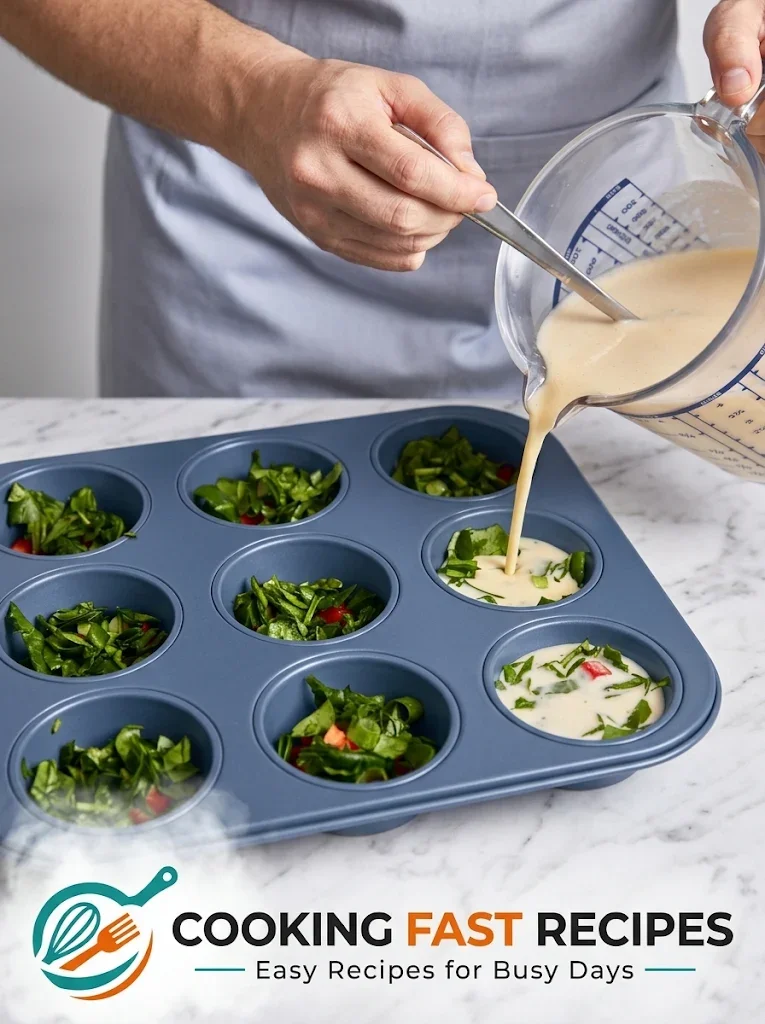
Divide the mixture evenly among the prepared muffin cups. Leave a little room at the top because the eggs can rise as they bake.
Avoid filling the cups all the way to the rim. If the mixture is unevenly distributed, give it another gentle stir before finishing the filling process.
For consistent portions, use a small measuring cup or ladle rather than pouring directly from the mixing bowl.
Step 5: Bake Until the Centers Are Set
Place the muffin pan in the preheated oven and bake for approximately 18–22 minutes.
The exact baking time can vary depending on the muffin pan, the size of the portions, and your oven. Start checking near the lower end of the suggested range.
The egg bites are ready when the centers are set and no longer look liquid. If the middle still appears wet, return the pan to the oven and check again after a few minutes.
For food safety, egg dishes should reach an internal temperature of 160°F (71°C). A food thermometer is the most reliable way to check.
Step 6: Rest and Remove the Egg Bites

Take the muffin pan out of the oven and let the egg bites rest for several minutes. This short resting period helps them firm up and makes them easier to remove.
Carefully loosen the edges with a small silicone spatula or butter knife. Lift each portion gently to avoid breaking it.
Serve warm, or allow the egg bites to cool before storing them for later.
Tips for the Best Oven Baked Egg Bites
A few practical preparation tips can help you get a better result.
Do Not Overfill the Muffin Cups
Egg mixtures expand as they cook. Leaving a little space at the top helps prevent the mixture from overflowing and makes the portions easier to remove.
Chop the Vegetables Finely
Small pieces of bell pepper, spinach, and green onion distribute more evenly through the egg mixture. Large pieces can make individual portions harder to hold together.
Remove Excess Moisture from Vegetables
Spinach and mushrooms can release moisture during cooking. If you use mushrooms, cook them first and allow them to cool. If you use frozen spinach, thaw and squeeze it thoroughly.
Too much moisture can make the finished egg bites watery or soft in the center.
Distribute the Cheese Evenly
Stir the cheddar through the mixture before filling the muffin cups. This helps avoid some portions containing mostly egg while others contain most of the cheese.
Let the Egg Bites Rest Before Removing
Freshly baked eggs are delicate. Allowing them to rest briefly gives the structure time to settle and reduces the chance of breaking them when you lift them from the pan.
Avoid Overbaking
Leaving egg bites in the oven for too long can make their texture firm or rubbery. Check the centers as they approach the end of the suggested baking window and remove them once they are fully set and have reached a safe internal temperature.
Easy Egg Bites Variations
One of the best things about homemade egg bites is how easily you can change the fillings. Keep the basic egg mixture and adjust the cheese and vegetables to create a different breakfast.
Spinach and Feta Egg Bites
Replace the cheddar with crumbled feta and add a little extra chopped spinach. Feta has a stronger, saltier flavor, so taste the mixture before adding extra salt.
Mushroom and Cheese Egg Bites
Finely chop mushrooms and cook them in a skillet until their excess moisture has evaporated. Let them cool before adding them to the egg mixture. Mozzarella or cheddar can complement the mushrooms.
Bell Pepper and Onion Egg Bites
Use a mixture of red and green bell peppers with finely chopped onion. This combination adds color and a mild savory flavor.
Bacon and Cheddar Egg Bites
Add small pieces of fully cooked bacon and keep the shredded cheddar. Make sure the bacon has cooled before mixing it into the eggs.
Vegetable Egg Bites
Combine spinach, bell peppers, mushrooms, and green onions for a vegetable-focused variation. Cook moisture-rich vegetables first and allow them to cool before adding them.
Whatever variation you choose, avoid adding large amounts of extra ingredients. Too much filling can change the balance of the egg mixture and make the portions difficult to set properly.
How to Store and Reheat Homemade Egg Bites
These egg bites can be prepared ahead of time, which makes them useful for breakfast meal prep.
Refrigerating Leftovers
Allow the cooked egg bites to cool, then transfer them to an airtight food storage container. Refrigerate promptly and use within 3–4 days.
Do not leave cooked eggs at room temperature for more than two hours. If the surrounding temperature is above 90°F (32°C), refrigerate them within one hour.
Reheating in the Microwave
Place one or more egg bites on a microwave-safe plate. Heat in short intervals until warmed through. The exact time depends on the number of portions, their starting temperature, and the microwave’s power.
Avoid overheating them, as this can make the eggs firm and affect their texture. Reheat leftovers until they reach 165°F (74°C).
Freezing Egg Bites
For longer storage, allow the egg bites to cool completely. Arrange them in a single layer and freeze until firm, then transfer them to a freezer-safe container or bag.
Separate layers with parchment paper if needed to make individual portions easier to remove. For the best quality, label the container with the preparation date.
Thaw frozen egg bites in the refrigerator before reheating. Their texture may be slightly different after freezing, especially if they contain vegetables with a high water content.
For food safety, egg dishes should be cooked to an internal temperature of 160°F (71°C). You can review the official USDA Safe Minimum Internal Temperature Chart for more guidance on safe cooking temperatures.
What to Serve with Homemade Egg Bites
Egg bites are easy to serve on their own, but a few simple sides can turn them into a more complete breakfast.
- Whole-grain toast: A slice of toast adds a crisp texture and pairs well with the soft eggs.
- Fresh fruit: Berries, orange slices, melon, or apple slices add a refreshing contrast.
- Sliced avocado: Serve avocado on the side for a creamy addition.
- Breakfast salad: A small salad with fresh greens and tomatoes works well for a lighter meal.
- Homemade waffles: For a larger breakfast, serve egg bites alongside our Waffle Recipe from Scratch.
- Pancakes: If you prefer a sweet-and-savory breakfast, pair them with our Old Fashioned Pancake Recipe.
You can also serve egg bites as part of a breakfast platter with toast, fruit, and a warm drink.
Frequently Asked Questions
Can I make egg bites ahead of time?
Yes. Bake the egg bites, allow them to cool, and store them in an airtight container in the refrigerator. Reheat individual portions when you are ready to serve. For food safety, refrigerate them promptly rather than leaving them on the counter.
Why are my egg bites watery?
Excess moisture from vegetables is a common reason. Spinach, mushrooms, and frozen vegetables can release water during cooking. Cook moisture-rich vegetables when needed, thaw frozen spinach, and squeeze out excess liquid before adding it to the egg mixture.
Can I make egg bites without cottage cheese?
Yes. You can leave out the cottage cheese, but the texture will be different and may be less creamy. A small amount of milk can be used as an alternative, but adding too much liquid may affect how the egg bites set.
How do I know when egg bites are done?
The centers should be set and should not look liquid. For a reliable food-safety check, use a food thermometer to confirm that the center reaches 160°F (71°C).
Can I use frozen spinach?
Yes. Thaw the spinach completely and squeeze out as much excess moisture as possible before mixing it with the eggs. This helps prevent watery egg bites.
Can I use a different type of cheese?
Yes. Mozzarella, feta, or a cheese blend can be used instead of cheddar. Keep in mind that each cheese has a different flavor, salt level, and moisture content.
Can I make these egg bites without a blender?
Absolutely. Whisk the eggs and cottage cheese together in a bowl until combined. The mixture may not be as smooth as the blended version, but a blender is not essential.
Final Thoughts
These easy oven baked egg bites are a flexible breakfast option made with simple ingredients. Eggs, cottage cheese, cheddar, spinach, and bell pepper come together in individual portions that are easy to serve and convenient to prepare ahead.
Keep the original vegetable and cheese combination, or try one of the variations to suit your preferences. Serve the egg bites with toast and fresh fruit for a quick breakfast, or make them part of a larger weekend brunch.
If you enjoy easy homemade breakfast recipes, explore our homemade waffle recipe and fluffy old fashioned pancakes for more ideas.